
Archer Unveils Halo: The Commercial Autonomous VTOL Co-Developed With Anduril
Archer Aviation unveiled Halo at Farnborough 2026 — a fully autonomous hybrid-electric VTOL co-developed with Anduril, with Marubeni Aerospace as laun
Main Story
Archer Aviation (NYSE: ACHR) used the 2026 Farnborough International Airshow as the stage for a significant product reveal: Halo, the commercial variant of a dual-use autonomous VTOL aircraft platform jointly developed with defense technology firm Anduril Industries. The announcement on July 22 came one day after Anduril unveiled Thunder — the defense variant of the same underlying platform — marking a coordinated, sequenced rollout at one of aerospace's most watched venues.
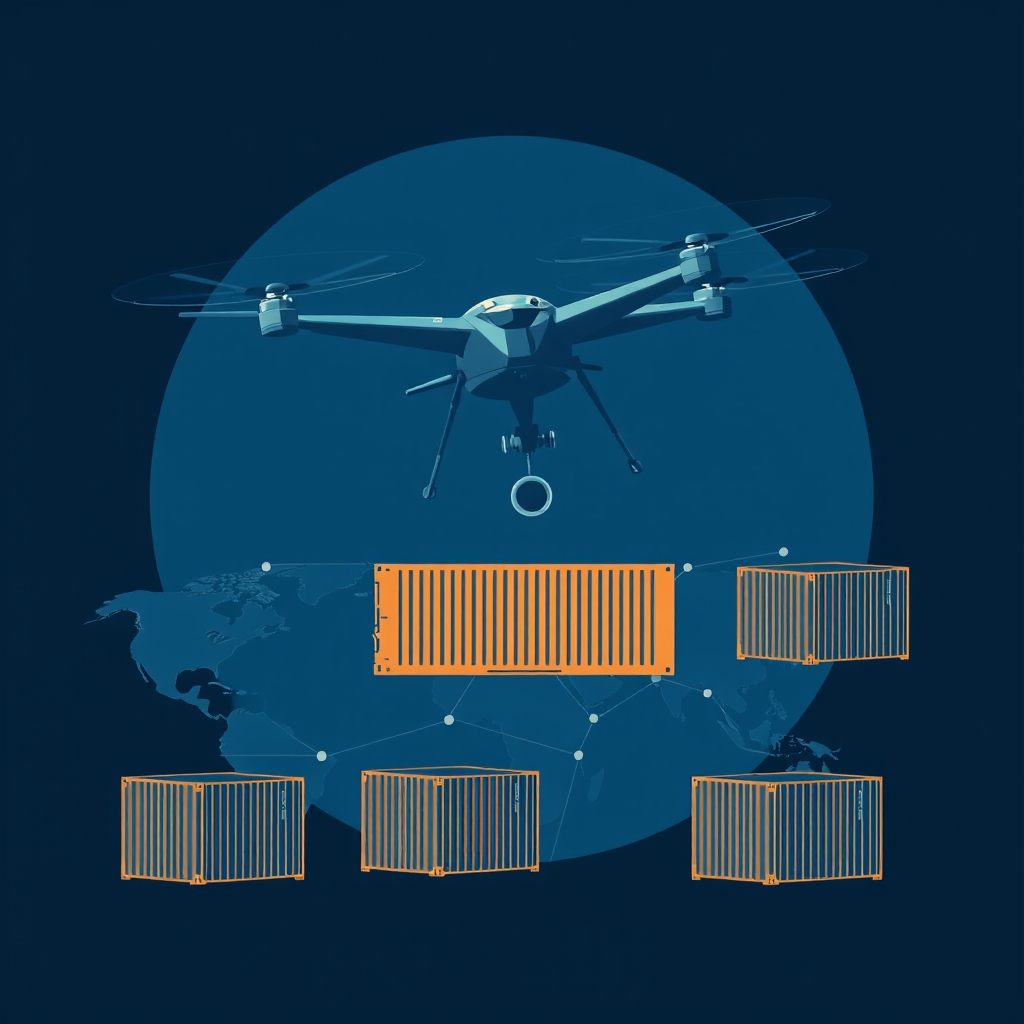
The dual-platform strategy reflects a deliberate engineering decision: build a single, high-performance airframe capable of serving fundamentally different operational environments, then configure it for each market. Both Halo and Thunder share the same airframe, hybrid-electric powertrain, and core systems, with payloads that can be configured to match specific mission requirements. For Halo, that means modular commercial cargo bays suited to offshore energy logistics, urgent freight, humanitarian cargo delivery, and maritime support operations — without the need for a runway at either end.
What makes the architecture notable is its lineage. The dual-use platform builds directly on technologies developed and matured across eight years of Archer's commercial eVTOL program, most visibly through the Midnight passenger aircraft, which has now accumulated more than 400 test flights. Archer's CEO Adam Goldstein framed the progression in terms of accumulated engineering depth — powertrain systems, battery management, motor design, and manufacturing processes — all carried forward into a clean-sheet design that, according to Archer, occupies a different performance class in terms of range, speed, and payload capacity compared to the original Midnight.
The clean-sheet nature of Halo's design is significant. Rather than adapting an existing airframe, Archer and Anduril jointly engineered the platform from the ground up, incorporating optimum-speed tiltrotors (OSTR) that transition the aircraft from vertical takeoff to wing-borne cruise — a configuration that uses just two tiltrotor assemblies rather than the six-rotor layout of Midnight. The OSTR approach allows rotor RPM to be continuously varied across flight regimes, preserving aerodynamic efficiency in cruise while reducing acoustic output during low-altitude and suburban operations.
Another notable logistical feature: the aircraft is designed to fit within a standard shipping container, enabling transport by air, road, rail, or sea. This containerisation capability, combined with the platform's fully autonomous operation, positions Halo for rapid deployment across geographically dispersed or infrastructure-limited sites. Archer has also indicated that Halo is being engineered for low-cost, high-volume production, targeting integration into commercial supply chains at scale.
On the partnership front, Archer named Marubeni Aerospace Corporation as Halo's strategic launch partner. Marubeni Aerospace is a subsidiary of Marubeni Corporation, one of Japan's largest general trading companies, with established experience representing major international aircraft and helicopter manufacturers across the aviation sector. The partnership scope covers joint market research, use case identification, and future market introduction of Halo in Japan and beyond. Marubeni Aerospace brings prior advanced air mobility engagement to the table, having previously signed a conditional option agreement for up to 200 VX4 eVTOL aircraft from UK-based Vertical Aerospace and conducted crewed eVTOL demonstration flights in Japan using the LIFT HEXA aircraft in 2025. Additional commercial partners for Halo are expected to be announced before the end of 2026.
On the flight-test front, Archer confirmed that multiple full-scale surrogate aircraft flights have already been completed for the Thunder variant, with a first official flight of the production-representative aircraft planned for 2027.
Technical Breakdown
| Parameter | Detail |
|---|---|
| Platform class | Autonomous, unmanned tiltrotor VTOL |
| Design approach | Clean-sheet; dual-use (commercial: Halo / defense: Thunder) |
| Propulsion | Series hybrid-electric powertrain |
| Rotor configuration | Dual optimum-speed tiltrotors (OSTR); variable RPM across flight regimes |
| Payload | Configurable modular payload (commercial cargo); heavy-lift class per Archer's positioning |
| Range / Endurance | Engineered for significant range and endurance sufficient to reach remote and offshore sites; exact figures not yet published |
| Autonomy level | Fully autonomous (pilotless); no remote pilot required in flight |
| Transport / logistics | Fits inside a standard shipping container; transportable by air, road, rail, or sea |
| Target missions (Halo) | Offshore energy logistics, urgent freight, humanitarian cargo, maritime support |
| Flight test status | Multiple full-scale surrogate aircraft flights completed; first production-representative flight planned for 2027 |
| Technology heritage | Draws from 8 years and 400+ test flights of Archer's Midnight passenger eVTOL program |
The series hybrid-electric architecture is the powertrain's defining technical choice. Unlike a pure-electric system constrained by battery energy density, the series hybrid arrangement uses an internal combustion generator to extend energy availability across the full flight envelope, while electric motors drive the tiltrotors with the high responsiveness and precision characteristic of electric propulsion. The OSTR configuration complements this by minimising fuel burn and acoustic signature in cruise — a property that simultaneously benefits noise-sensitive commercial operation and low-observability in the Thunder variant.
Industry Impact
For manufacturers and integrators: Halo's reveal accelerates a broader industry trend: the convergence of commercial eVTOL engineering with uncrewed autonomous logistics platforms. By sharing a common airframe across civil and defense variants, Archer and Anduril are pursuing production economies of scale that single-market platforms cannot achieve. The containerisation and supply-chain-oriented production design signals that Archer intends to position Halo not as a premium bespoke aircraft but as a high-volume, deployable logistics tool — a meaningful shift in commercial VTOL manufacturing philosophy.
For operators and end-users: The addressable market is broad. Offshore energy operators, humanitarian logistics organisations, and maritime freight customers all stand to benefit from a VTOL asset that requires no runway, no onboard crew, and no dedicated airstrip infrastructure. The autonomous architecture directly reduces per-mission operating costs and eliminates crew scheduling constraints — a point Marubeni Aerospace's CEO explicitly cited as the central business case for the partnership.
For regulators: Halo adds urgency to regulatory frameworks for fully autonomous, beyond-visual-line-of-sight (BVLOS) operations at the heavy-payload scale. Unlike small commercial drones already navigating BVLOS certification pathways, a platform of Halo's class and mission profile will require regulators in Japan, the United States, and other target markets to engage with autonomous logistics certification standards that remain, in most jurisdictions, still in development.
For investors: Archer's dual-use platform strategy provides a hedge across two distinct revenue streams — commercial logistics and defense procurement — using a single development cost base. With Marubeni Aerospace as a named launch partner and additional announcements signalled for later in 2026, the commercial order pipeline for Halo is beginning to take shape. Investors will watch closely for hard payload and range specifications, certification timelines, and the identity of subsequent partners as indicators of addressable market depth.