
FCC Bars DJI Logic-Bearing Components From New US-Built Drones, Effective October 13
FCC rule FCC 26-50 takes effect Oct 13, blocking authorization of US-assembled drones containing DJI or Autel logic-bearing components.
Main Story
For the better part of a year, the FCC's equipment-authorization crackdown on foreign-made drones has focused on the country of final assembly. A drone built outside the United States could not receive a new authorization; one assembled domestically could — even if its internal electronics came from a Covered List manufacturer. That distinction disappears on October 13, 2026.
The Commission's Third Report and Order, designated FCC 26-50 and filed under ET Docket No. 21-232, prohibits the authorization of any radio device that incorporates a logic-bearing hardware component produced by an entity on the FCC's Covered List, where that device would itself have been denied authorization had the listed entity built the entire product. The rule was published in the Federal Register at 91 FR 57798 on September 11, 2026, and takes effect 32 days later.
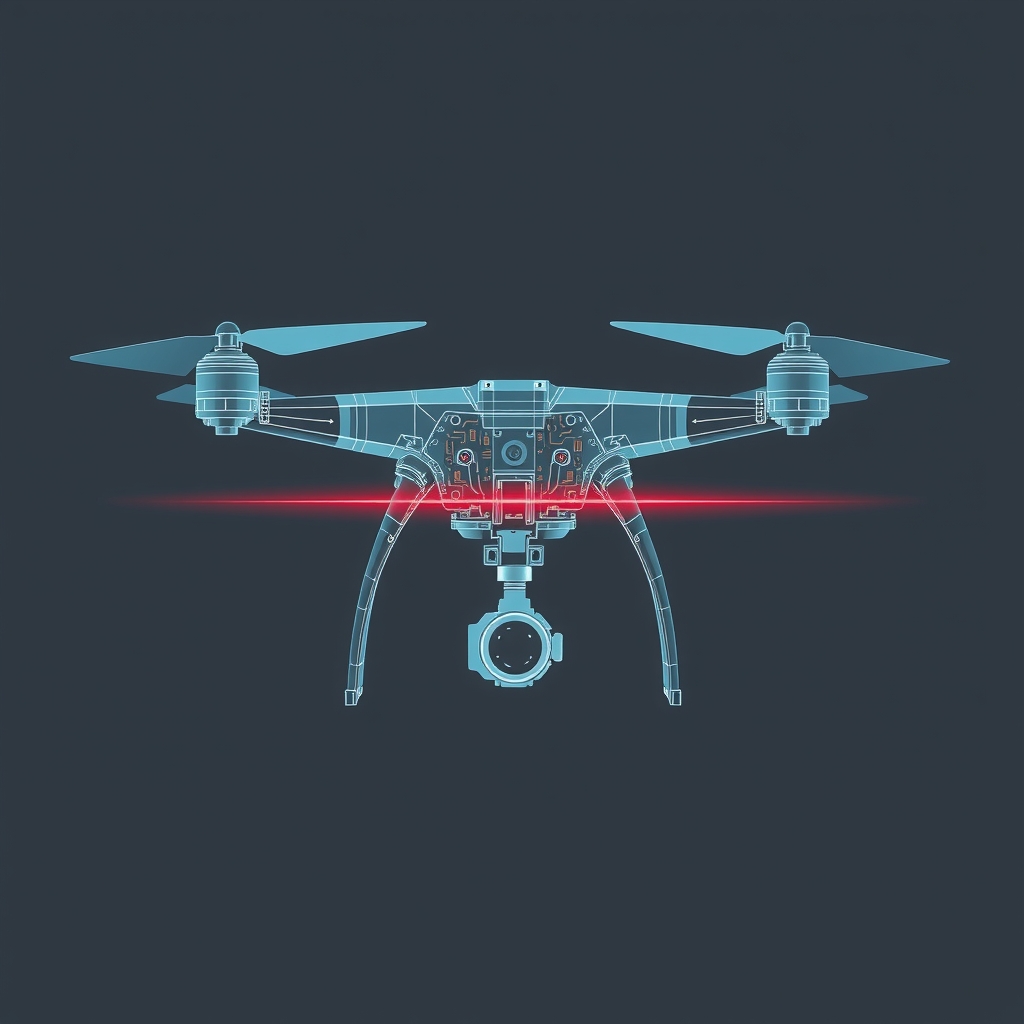
The practical consequence for the US drone industry is direct: a drone designed and assembled in the United States cannot receive a new FCC equipment authorization after October 13 if it carries a DJI- or Autel-produced circuit board, flight controller, radio module, camera board, or gimbal controller. The component's origin disqualifies the host device regardless of where that device was built or branded.
What the FCC is closing
The Commission describes this rulemaking as closing the component part loophole. Prior iterations of the supply-chain security framework — rooted in the Secure and Trusted Communications Networks Act of 2019 and the Secure Equipment Act of 2021 — blocked finished devices and modular transmitters from Covered List entities. The Third Report and Order amends 47 CFR § 2.903 to extend that prohibition inward, to any logic-bearing sub-assembly inside a host device, regardless of the host device's own provenance.
The Commission's logic is a transfer test: if the Covered List entity had manufactured the entire device, that device would be refused authorization. The presence of the entity's logic-bearing component inside a device otherwise assembled by someone else presents, in the Commission's assessment, essentially the same supply-chain risk as the wholly foreign-made product.
How "logic-bearing" is defined
The new definition, added to 47 CFR § 2.902, is deliberately broad. A logic-bearing hardware component covers any module, sub-assembly, integrated circuit, or other physical part that generates and uses timing signals above 9,000 cycles per second using digital techniques, or that uses radio-frequency energy to compute, store, or move data. This technical baseline is drawn from the existing digital-device definitions in 47 CFR § 15.3(k). Flight controllers, radio modules, camera boards, and gimbal controllers all fall within it.
Compliance mechanism
Enforcement of the new component rule rests on the applicant's own attestation that the device being submitted for authorization does not contain covered components. The Commission's accompanying Third Further Notice of Proposed Rulemaking — for which reply comments closed September 21, 2026 — asks whether applicants should also be required to submit a full hardware bill of materials (HBOM) and software bill of materials (SBOM) with every authorization application, and whether the prohibition should ultimately extend beyond logic-bearing components to all components from Covered List entities.
Odyssey Robot: the cautionary precedent
The regulatory record already contains one enforcement data point. The FCC certified Odyssey Robot's drone and controller in April 2026, then opened a show-cause proceeding in July after a published report questioned the company's claimed Texas assembly origin. On August 11, the Commission revoked both authorizations, concluding the company had obtained them on false statements about where the equipment was produced. The company did not respond to the revocation order. For any US-based integrator considering attestation of domestic component sourcing, the Odyssey Robot revocation establishes that false claims carry an authorization-loss consequence.
Conditional approvals and exemptions remain in parallel
The October 13 rule operates alongside, not instead of, the exemption architecture the FCC has maintained since January 2026. Blue UAS hardware and drones qualifying as domestic end products under the Buy American Standard remain exempt from Covered List restrictions; that categorical exemption now runs to January 1, 2028. Individual Conditional Approvals granted to specific manufacturers carry no fixed expiry for UAS — a July 21, 2026 determination removed the earlier December 31, 2026 sunset from every UAS conditional approval and tied continued authorization instead to the company's onshoring plan. Neither exemption pathway, however, overrides the October 13 logic-bearing component rule for the purpose of authorizing new US-assembled platforms carrying Covered List chips.
Technical Breakdown
- Rule scope: Equipment authorization prohibition under 47 CFR § 2.903 (as amended by FCC 26-50)
- Component definition: Logic-bearing hardware component per new 47 CFR § 2.902 — any module, sub-assembly, integrated circuit, or physical part operating above 9 kHz using digital techniques, or using RF energy to compute, store, or move data
- Affected sub-assemblies (illustrative, not exhaustive): Flight controllers, radio transmitter/receiver modules, camera imaging boards, gimbal controllers — all meet the technical threshold
- Transfer test: A host device is disqualified if it would have been refused authorization had the Covered List entity produced the entire device
- Compliance mechanism: Applicant self-attestation at time of authorization filing; HBOM/SBOM requirement under consideration in Third FNPRM
- Covered List entities relevant to drone industry: DJI (SZ DJI Technology Co.) and Autel Robotics, among others
- Effective date: October 13, 2026 (published 91 FR 57798, September 11, 2026)
- Docket: ET Docket No. 21-232; FCC 26-50 (adopted July 22, 2026; released July 23, 2026)
- Statutory authority: Communications Act of 1934; Secure and Trusted Communications Networks Act of 2019 (47 U.S.C. §§ 1601–1609); Secure Equipment Act of 2021
Industry Impact
For domestic drone manufacturers and integrators The October 13 rule fundamentally reshapes the bill-of-materials calculus for any US-based drone OEM seeking a new FCC equipment authorization. A platform may be assembled in Texas, designed by a US engineering team, and priced as a domestic product — but if a single DJI-sourced flight controller or radio module sits on the stack, the authorization application fails. Integrators who have been sourcing Covered List components for cost or performance reasons must now either qualify alternative suppliers or operate on existing authorizations. The rule is prospective: it does not revoke authorizations already granted.
For the domestic component supply chain The practical knock-on is an accelerated pull for US-sourced or otherwise non-Covered-List flight controllers, radio modules, and imaging boards. Analysts and industry groups have already flagged that domestic manufacturers of batteries, motors, flight controllers, and sensors will see demand increase as foreign counterparts lose certification pathways. Companies with existing NDAA-compliant or Blue UAS supply chains — including several already holding FCC Conditional Approvals tied to onshoring commitments — are best positioned to fill specification gaps quickly.
For operators Existing fleets are unaffected. Drones already holding FCC equipment authorizations retain those authorizations; the rule does not ground aircraft already in service. The long-term operational risk lies in fleet refresh cycles: if a preferred US-assembled platform cannot receive a new authorization because it relies on Covered List components, operators will face a narrower set of authorized replacement models as existing inventory depletes.
For regulators The Third FNPRM running in parallel asks whether the FCC should require hardware and software bills of materials with every authorization application. If adopted, that requirement would transform component sourcing from a self-attested detail into a documented, auditable element of the authorization record — significantly raising the compliance bar and the evidentiary standard for enforcement. The Odyssey Robot revocation demonstrates the FCC's existing willingness to act on false attestations.
For investors and capital allocators The regulatory trajectory now clearly favors domestic component manufacturers and drone OEMs with supply chains that can pass the transfer test. Companies building onshoring plans as part of Conditional Approval applications — the route currently open to foreign-origin manufacturers seeking continued market access — face a defined set of disclosure obligations including corporate-structure transparency down to 5%-or-greater beneficial owners. The timeline and credibility of those commitments will increasingly determine authorization continuity.