
First Breach Completes First Drone Flight as Company Begins Nasdaq Trading
First Breach (FBDT) completes its first drone prototype flight days after listing on Nasdaq, targeting 2,500+ Class 1 attritable drones/week by Q2 202
Main Story
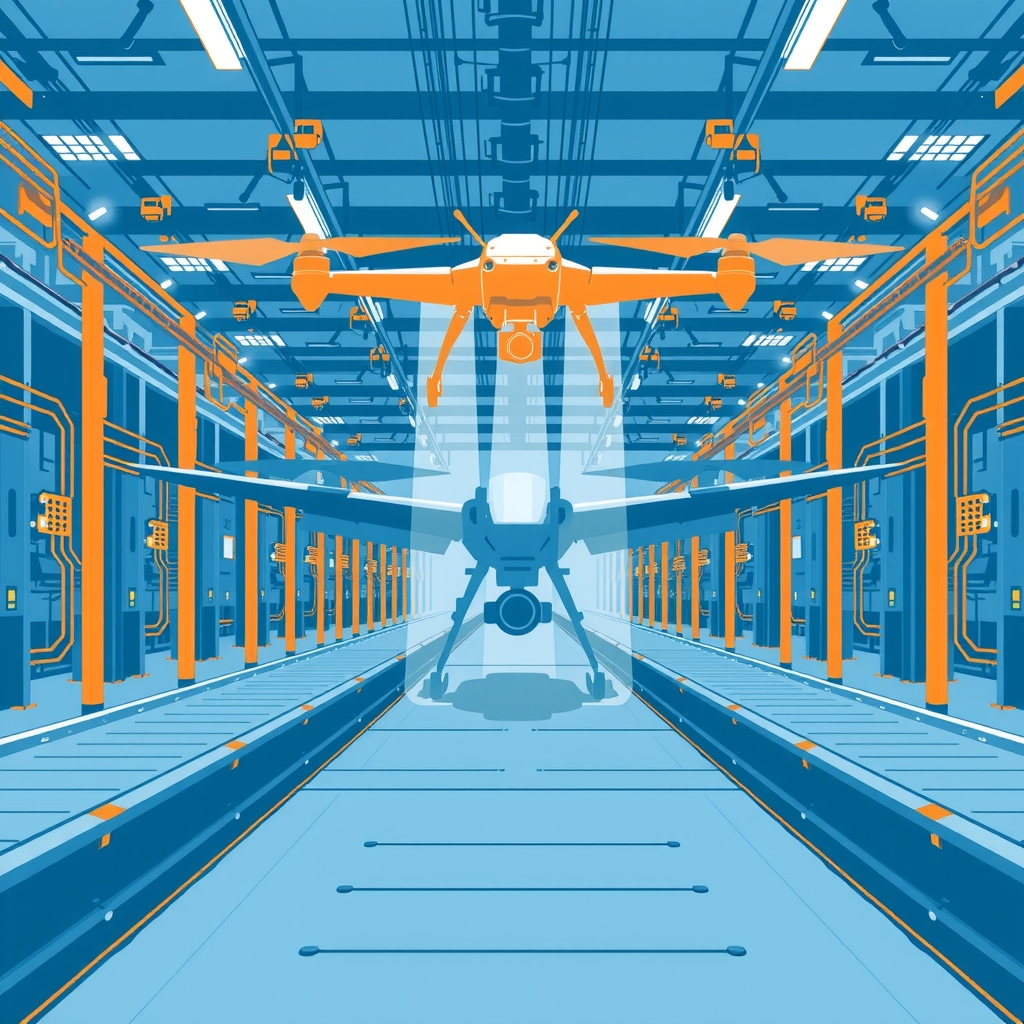
First Breach Inc., a Hagerstown, Maryland defense technologies company, marked two milestones within days of each other in late August 2026: its common stock began trading on the Nasdaq Capital Market under the ticker symbol FBDT, and the company completed the first flight of its proprietary drone prototype. Together, the events signal the company's formal transition from a vertically integrated ammunition manufacturer into a developer of domestically produced unmanned aerial systems.
The company's roots are in ammunition manufacturing. Operating from its Hagerstown facility, First Breach produces match-grade brass cups, casings, projectiles, lead cores, lead wire, and completed ammunition across calibers including 9mm, .223 REM, and 5.56 NATO. That facility — housed in a building with historical ties to Fairchild Engine & Aircraft Corporation, which once produced aircraft including the A-10 Warthog — now anchors the company's push into UAS.
First Breach commenced Nasdaq trading on August 20, 2026. Days later, on August 25, the company announced completion of the drone prototype's first flight, representing its first tangible development milestone in the UAS space. CEO and Co-Founder Jeffrey Low called it "an important step in expanding First Breach beyond ammunition and into American-made unmanned aerial systems."
At the center of the drone program is a strategic agreement with Hellbender, Inc., a Pittsburgh-based engineering and advanced manufacturing firm specializing in physical AI, computer vision, robotics, and automated manufacturing. Under the arrangement, Hellbender provides engineering, design, technical support, and component manufacturing for two Class 1 attritable drone platforms, while First Breach retains full ownership of the platforms and their associated intellectual property, and will control manufacturing and commercialization.
The two platforms were disclosed in an SEC filing earlier this year as Class 1 attritable first-person-view (FPV) drone systems targeted for deployment consistent with U.S. National Defense Authorization Act requirements and Department of Defense Drone Dominance Program parameters. One is designed for compact, close-quarters operations; the other is configured for longer-range missions. Both share a common component architecture — a deliberate engineering decision intended to streamline supply chains, support scalable assemblies, maintain consistent quality, and enable adaptable mission configurations across a high-volume domestic production line.
On the infrastructure side, First Breach currently operates approximately 80,000 square feet of active ammunition manufacturing space at its Hagerstown campus, with more than 200,000 additional contiguous square feet designated to support drone production, robotic assembly, and automated logistics. The facility operates under ISO 9001:2015 certification.
The production roadmap is specific: completion of initial prototypes is targeted for Q4 2026, followed by a production scale-up phase beginning Q2 2027 — supported by advanced robotics, computer vision, and automated manufacturing capabilities. The company's stated target is production capacity exceeding 2,500 drones per week as manufacturing operations mature.
COO and Co-Founder Jordan Low framed the next phase clearly: "With the first flight complete, our focus is on finishing the prototyping iterations, scaling the manufacturing infrastructure, and refining our automated production capabilities needed to begin scaling in the second quarter of 2027."
Technical Breakdown
| Parameter | Detail |
|---|---|
| UAV Class | Class 1 (per DoD classification) |
| Platform Type | Attritable First-Person-View (FPV) drone |
| Number of Platforms | Two variants: close-quarters system + longer-range system |
| Component Architecture | Common components across both variants for supply chain efficiency and scalable assembly |
| Propulsion / Autonomy | Not yet publicly disclosed at prototype stage |
| Payload | Not yet publicly specified |
| Sensors / ISR | ISR and sensor technologies referenced; specific sensor suite not yet disclosed |
| Endurance / Range | Not yet disclosed |
| Production Technology | Advanced robotics, computer vision, automated assembly |
| Facility | ~80,000 sq ft active manufacturing + 200,000+ sq ft designated drone production space, Hagerstown, MD |
| Quality Standard | ISO 9001:2015 certified |
| Target Compliance | NDAA requirements; DoD Drone Dominance Program parameters |
| Target Production Cadence | >2,500 drones/week at scale (Q2 2027 ramp) |
Industry Impact
For manufacturers: First Breach's approach — entering the UAS space via an existing, ISO-certified, vertically integrated manufacturing facility — represents a distinct entry strategy compared with purpose-built drone startups. The use of common components across two platform variants is a deliberate production-engineering choice that reduces tooling complexity and supports rapid replication, a key requirement under the DoD Drone Dominance Program's emphasis on domestic volume and throughput.
For the DoD Drone Dominance ecosystem: The program's Gauntlet framework has already underscored that production maturity — not just flight performance — is a competitive differentiator. First Breach's stated trajectory aligns with Drone Dominance's attritable FPV focus and NDAA compliance requirements. However, the company is still in prototype iteration; the gap between a first flight and Blue UAS certification (which requires third-party assessment covering hardware integrity, software security, supply chain provenance, and cybersecurity) represents a significant engineering and compliance journey ahead.
For integrators and operators: The close-quarters / longer-range dual-platform architecture — sharing common components — could simplify logistics for operators running mixed fleets. Whether the platforms achieve Blue UAS Cleared List status will be a key qualification gate for any DoD or federally funded procurement.
For investors: The Nasdaq listing provides First Breach with public-market visibility and a capital-access pathway to fund its manufacturing scale-up. The company's existing ammunition revenue base provides a degree of operating stability that pure-play drone startups lack, though the UAS program remains pre-revenue and prototype-stage. The 2,500-drones-per-week target is ambitious; reaching it will require demonstrating automated production reliability at a scale very few domestic UAS manufacturers have achieved.
For regulators: As the Blue UAS process transitions from DIU to DCMA, new entrants like First Breach will need to navigate component-level supply chain provenance requirements for critical subsystems — flight controllers, data links, radio transmitters, cameras — regardless of where final assembly occurs. How the company sources and certifies these subsystems through Hellbender's supply chain will be a critical compliance question in the coming prototype-completion phase.