
HoverAir Versa Wants to Replace Your Gimbal and Your Drone
HoverAir Versa: a 230g modular device that converts from 3-axis pocket gimbal to AI self-flying drone. FCC-certified, launching fall 2026.
HoverAir Versa Wants to Replace Your Gimbal and Your Drone
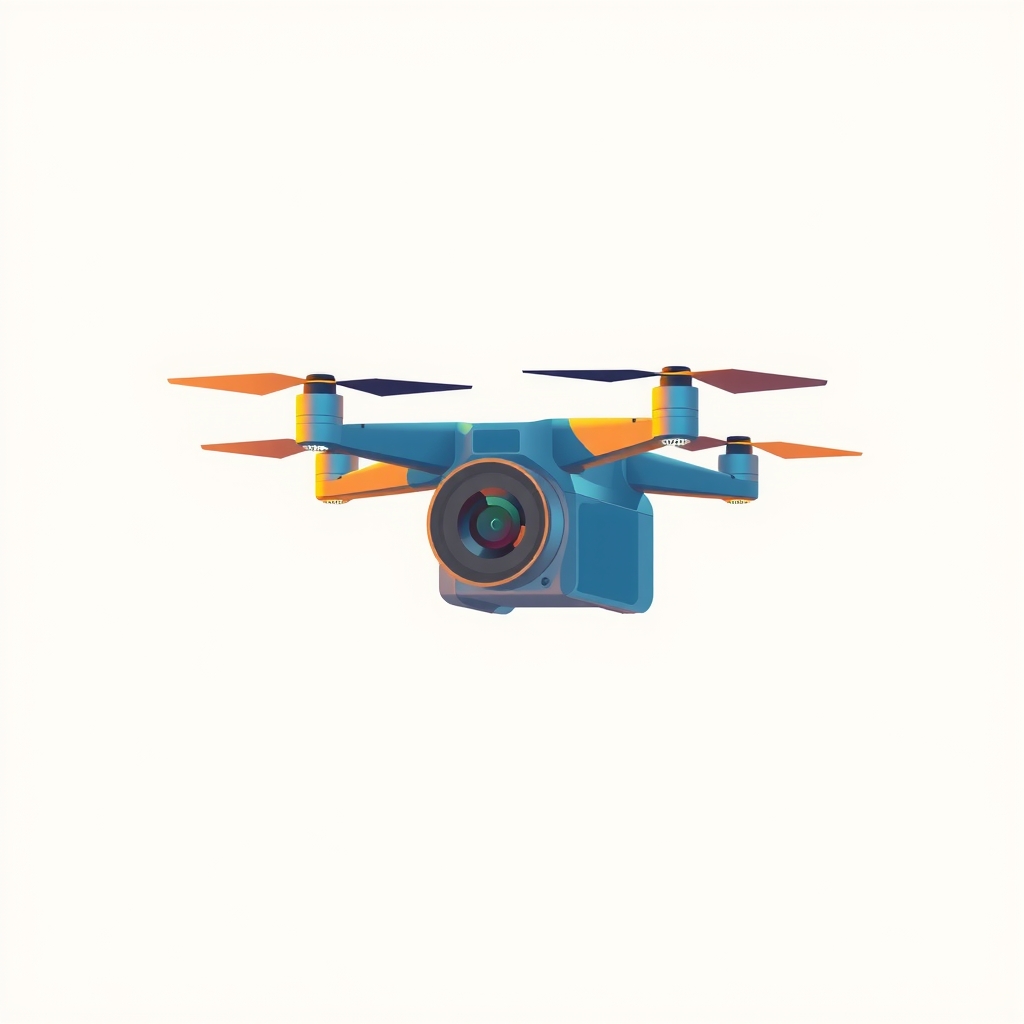
For years, creators have shouldered two separate devices to cover two distinct capture scenarios: a stabilized pocket camera for handheld footage and a drone for aerial shots. ZeroZero Robotics, the parent company behind the HoverAir product line, is now engineering a direct answer to that redundancy with the HoverAir Versa — a modular, pocketable camera that operates as a 3-axis gimbal camera in handheld mode and transforms into a self-flying AI drone by snapping into an optional Flight Kit propeller chassis.
The Versa is the first product in HoverAir's catalogue to originate as a handheld gimbal camera rather than a drone. Where the company's X1 series — palm-launched, autonomous, and controller-free — built its reputation on intelligent subject tracking, the Versa extends that autonomy logic into a convertible hardware architecture. In handheld mode it operates as a conventional pocket camera: a three-axis mechanical gimbal, a built-in display, joystick controls, and optical stabilisation. Slide it onto the Flight Kit, unfold the arms, and it becomes a self-flying camera — no controller or piloting skill required, the same no-barrier approach HoverAir built the X1 series around.
The MagLatch mechanism
The conversion is enabled by an engineered docking interface HoverAir calls MagLatch. Because the detachable Flight Kit houses only motors and blades — relying on pogo pins for power and telemetry from the primary camera — the flight attachment itself carries no RF transmitters. This architecture meant the core camera module could clear FCC equipment authorisation as a standalone handheld device, without the Flight Kit needing its own independent FCC ID. The result is that Versa secured FCC certification where HoverAir's previous hardware — the waterproof Aqua drone, which completed a successful Indiegogo campaign but never obtained FCC approval before regulatory rules tightened in late 2025 — could not. US buyers remain shut out of the Aqua entirely; Versa arrives with that hurdle cleared.
The 230-gram all-up weight of the Versa-plus-Flight-Kit combination carries a secondary regulatory implication in the US market: it sits below the FAA's 250-gram threshold for mandatory registration and Remote ID, meaning recreational operators can fly without registering the aircraft.
Market positioning
The Versa launched on Indiegogo on August 18, 2026, with base pricing set at $499 for the camera unit alone, $887 for the Fly More Combo, and $1,270 for the Creator Combo. Retail availability through select stores and online channels is targeted for fall 2026. HoverAir will also stage a hands-on press preview at IFA Berlin 2026, with media access scheduled for September 3 ahead of the show's official opening.
The device targets solo creators, vloggers, travellers, and filmmakers who want both stabilised ground footage and aerial perspectives without carrying two separate kits — or managing two separate batteries, two charging systems, and two libraries of footage to colour-match in post.
Technical Breakdown
Platform / UAV class: Convertible pocket camera / micro-class autonomous drone
Weight: 230 g (all-up, gimbal docked in Flight Kit) — comprising a 163 g gimbal and a 67 g Flight Kit base
Dimensions: Handheld mode: 36 × 31 × 147 mm; Flying mode: 176 × 31 × 147 mm
Sensor: 1/1.3-inch CMOS, 12 MP stills
Lens: f/2.0, 16 mm equivalent; 2× digital zoom
Video: 4K at 60 fps (up to 120 Mbps, H.264/H.265); 4K at 30 fps in 10-bit HDR and 10-bit H-Log for professional workflows
Dynamic range: Up to 17.5 stops (10-bit H-Log mode)
Field of view: 98° standard; 106° in Ultra-Wide mode
Stabilisation: 3-axis mechanical gimbal (active in both handheld and flight modes)
Storage: 64 GB internal; microSD expansion up to 1 TB
Propulsion: Four enclosed propellers (Flight Kit); propeller guards enclose all blades for near-body safety
Endurance: Up to 14 minutes of autonomous flight; up to 180 minutes of handheld gimbal runtime on the same 2,070 mAh / 14.74 Wh / 7.12 V Li-ion battery
Top speed: 60 km/h in tracking flight
Range: Up to 500 m communications range (Wi-Fi 6); Bluetooth 5.3 for smartphone pairing
Autonomy level: High — palm take-off and landing, AI subject tracking, Auto Framing, Orbit, Bird's Eye, Zoom Out, Dolly Zoom, Inception Shot, Motion Timelapse, OmniTerrain ground adaptation
Control inputs: Hand gestures, voice commands (via Smart Mini MiCo controller), HoverAir Beacon accessory, joystick, smartphone app
Audio: Dual built-in microphones
Certifications confirmed: FCC (US)
Industry Impact
For manufacturers: The Versa's modular architecture — separating the camera/compute/RF module from a passive propulsion chassis — represents a meaningful engineering strategy for navigating FCC equipment authorisation rules that have complicated drone launches since late 2025. If the approach holds regulatory scrutiny at scale, it could become a template for other makers seeking US market access with convertible or hybrid devices. The design also raises a product-category question: as camera hardware becomes the 'brain' of a flying system, the line between a gimbal stabiliser and a drone becomes a design choice rather than a fixed classification.
For operators and creators: A single 230-gram device that covers both handheld stabilisation and autonomous aerial tracking eliminates the duplicate-kit problem — two batteries, two charge cycles, two footage libraries to grade-match — that has made combined handheld-plus-drone kits cumbersome. The sub-250-gram all-up weight means US recreational flyers face zero FAA registration or Remote ID obligations, lowering the compliance burden for casual and semi-professional users.
For regulators: The MagLatch docking architecture — where a passive Flight Kit attaches to a camera that holds all RF and compute functions — will likely draw attention from the FCC and FAA as they assess whether the classification of 'camera' versus 'drone' holds when the same device routinely operates as both. The Versa could prompt a policy clarification on how convertible devices should be categorised and certified.
For investors and integrators: HoverAir's Indiegogo campaign approach has worked before (the X1 series scaled from crowdfunding to broad retail), but the Aqua episode — successful campaign, no US delivery — demonstrates the regulatory risk in this product category. The Versa's pre-secured FCC certification removes the primary blocker that sank Aqua's US rollout, making the fall 2026 retail window more credible. Investors watching the pocket-drone and action-camera segments should note that the Versa's $499 entry price positions it against both premium gimbal cameras and entry-level drones simultaneously — a dual-addressable market with meaningful volume potential.