
Cleveland Clinic Bets Big on Prescription Delivery by Drone
Cleveland Clinic launches the first long-term U.S. health system prescription drone delivery program using Zipline's Platform 2 eVTOL system in Beachw
Main Story
Cleveland Clinic is now delivering certain medications to patients' homes via drones, marking the start of the first long-term deployment of a prescription drug drone delivery program by a U.S. health system. The program, operated in partnership with Zipline, is already making deliveries to eligible patients in Cleveland's east side suburbs — a milestone that moves healthcare drone logistics from isolated pilot programs into routine clinical operations.
The service is currently focused on deliveries within a five-mile radius of Cleveland Clinic's Beachwood Administrative Campus, which serves as the drones' home base. Eligible patients who already participate in Cleveland Clinic's pharmacy home delivery program for certain medications may opt for drone delivery at no additional cost. Controlled substances are not eligible for drone transport at this time.
Over time, Cleveland Clinic plans to expand to additional locations and include delivery of other medications, lab samples, medically tailored meals, and medical supplies.
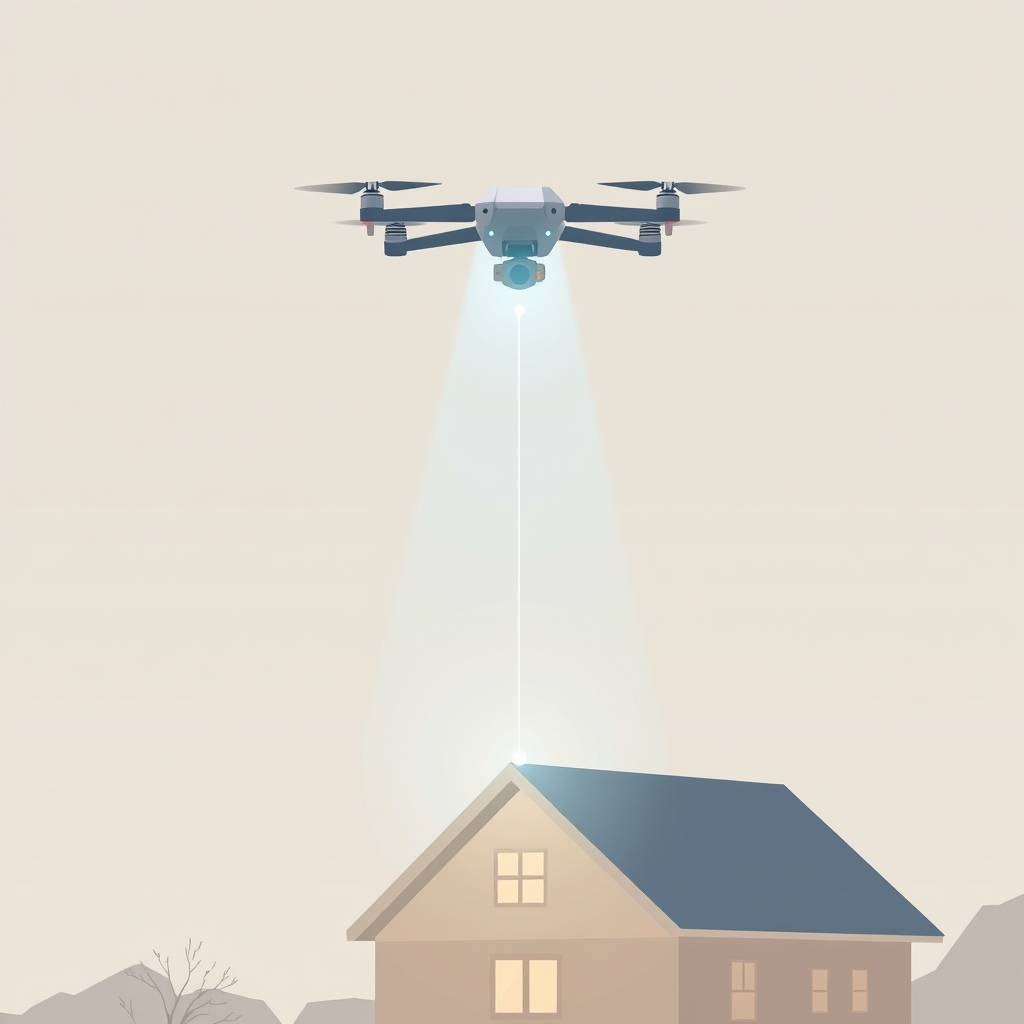
The delivery workflow is fully integrated into Cleveland Clinic's existing pharmacy infrastructure. When a prescription is ready, a pharmacy technician places the package into a secure drop box at the Beachwood facility. An electric Zipline drone autonomously retrieves the order and flies to its destination. Upon arrival, the drone holds at up to 300 feet above ground while a pod containing the prescription descends on a tether. The pod delivers the order and ascends back into the drone, which then returns to its charging station. Patients can follow the delivery in real time through a tracking link sent via Cleveland Clinic's MyChart messaging portal. According to Zipline, each aircraft performs more than 500 onboard safety checks every second during flight.
Zipline holds a Part 135 air carrier certification from the FAA — the first issued through the FAA's Beyond initiative, a program aimed at accelerating the integration of beyond visual line of sight (BVLOS) drone operations into U.S. airspace. That certification allows Zipline to fly beyond the visual range of the operator and over people. Cleveland Clinic and Zipline state they worked together to meet all regulatory and technical requirements before launching the service.
Technical Breakdown
Platform / UAV class: Zipline Platform 2 (P2) — a two-component multi-robot delivery system consisting of a parent "Zip" eVTOL drone and an autonomous sub-unit called the "Droid."
Propulsion / airframe: The P2 Zip uses four dual-propeller rotors for hovering combined with a fixed wing and pusher motor in a VTOL configuration, enabling efficient cruise flight as well as precision station-keeping over the delivery point.
Payload: The Droid carries a 2.5–3.5 kg (approximately 6–8 lb) payload per delivery cycle.
Service radius / range: Up to 10 miles out-and-back from a single dock; up to 24 miles one-way when flying dock-to-dock, with autonomous charging at each docking station.
Last-metre delivery mechanism: The Droid is lowered on a retractable tether from the hovering Zip, remaining at a minimum altitude of 300 ft (91 m) above ground. The Droid carries onboard thrusters and visual sensors to navigate to a delivery zone of approximately one meter in diameter, compensating for wind drift and parent-drone movement. Once the package is released, the Droid retracts back into the Zip.
Docking / charging: Unlike Platform 1, which required large standalone launch-and-recovery infrastructure, Platform 2 drones dock by flying beneath a compact overhead charging station and connecting upward — a design optimised for suburban and urban environments with limited ground footprint.
Noise profile: Extended tether length and shrouded propulsion reduce the acoustic signature of the delivery sequence to levels described as comparable to rustling leaves.
Autonomy level: Full end-to-end autonomous operation, including package retrieval, flight, last-metre descent, and return-to-dock, under FAA Part 135 BVLOS authorisation.
In-flight safety: Each aircraft executes more than 500 automated safety checks per second during flight.
Regulatory status: FAA Part 135 air carrier certificate (first issued under the FAA's BEYOND program); BVLOS operations authorised including flight over people and in controlled airspace.
Industry Impact
For health systems and operators: Cleveland Clinic's deployment establishes a replicable operational template for integrating drone delivery into existing pharmacy home-delivery workflows. The fact that the programme is structured as a long-term service — not a pilot — signals that the unit economics and regulatory pathway are now considered viable by at least one major U.S. health system. Other large health networks will be watching closely for patient-uptake and operational-cost data.
For Zipline: The Cleveland Clinic contract validates Platform 2's architecture for a demanding regulated-goods use case. Zipline had previously announced healthcare partnerships with Michigan Medicine, Intermountain Health, and MultiCare Health System; Cleveland Clinic's operational go-live adds a flagship brand to that roster and strengthens the case for Platform 2 deployment at additional hospital campuses.
For competing drone delivery operators: The BVLOS certification model Zipline has assembled — Part 135 air carrier status plus FAA BEYOND programme authorisation — currently differentiates it from operators still relying on Part 107 waivers. Competitors seeking to enter the healthcare logistics segment will need to navigate the same certification stack.
For regulators: The FAA's BEYOND programme is actively collecting operational data from certificated BVLOS operators to inform future rulemaking. Each new commercial deployment — particularly in a regulated-cargo category such as pharmaceuticals — adds to that evidence base and may accelerate the path toward standardised BVLOS rules.
For integrators and investors: The expansion roadmap Cleveland Clinic has disclosed — adding lab samples, medically tailored meals, and additional medications — points toward a multi-payload logistics model that could deepen Zipline's recurring revenue per health-system customer. The absence of controlled-substance eligibility at launch also signals a near-term regulatory and operational boundary that, if eventually resolved, could significantly widen the addressable payload category.