
UK Police Drone Crash Injures Child: DJI Matrice 30T Strikes Overhead Cable in First IOPC Drone Investigation
Kent Police DJI Matrice 30T struck an overhead cable and injured a child in 2025. IOPC — in its first-ever police drone investigation — now refers ope
Main Story
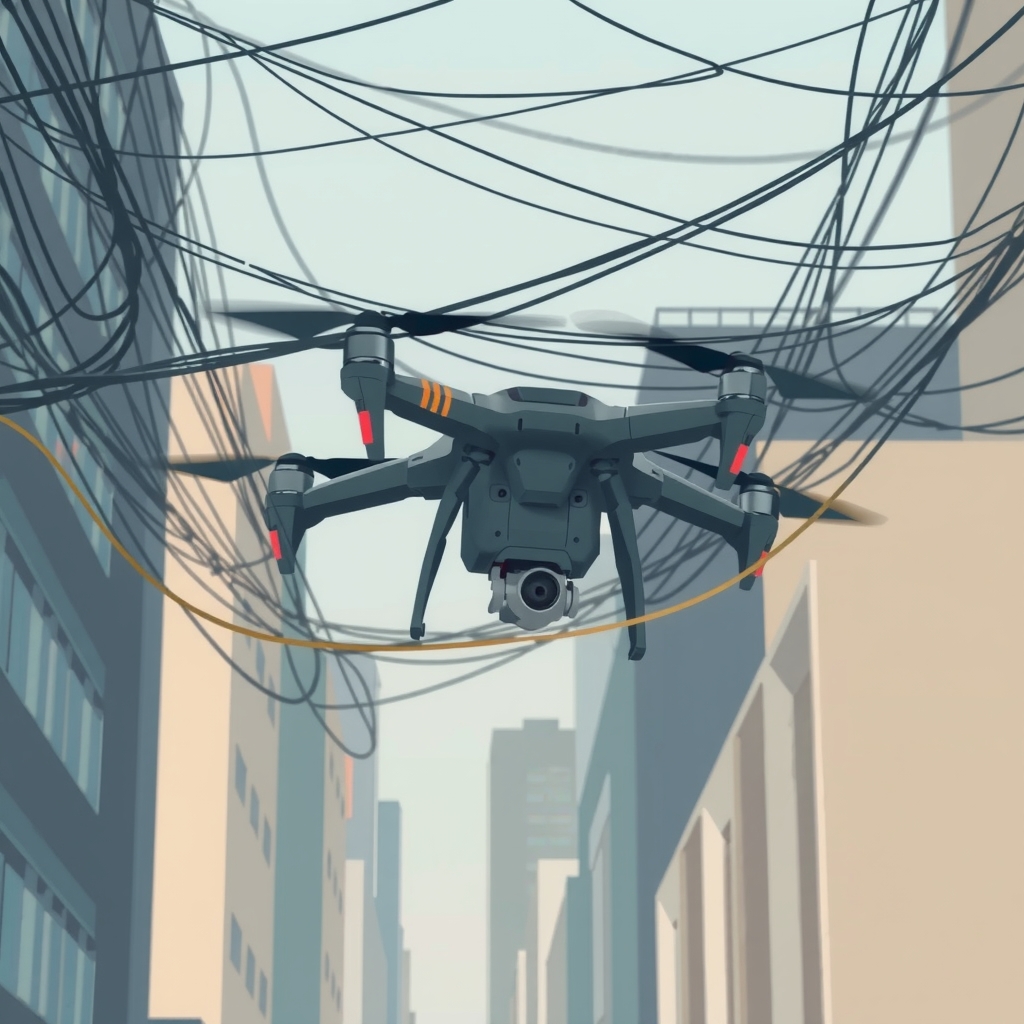
On 2 August 2025, at approximately 4:00 p.m. BST, a Kent Police special inspector deployed a DJI Matrice 30T unmanned aircraft during a multi-officer response to reports of a disturbance on the Isle of Sheppey, Kent. The drone was launched to assist in searching the area near the corner of Strode Crescent and Winstanley Road in Sheerness. Seconds after takeoff, the aircraft struck an overhead cable it had not been cleared for, fell to the ground, and struck a child, causing a significant injury to the child's right thumb and hand. The child required two surgical procedures and was treated at multiple specialist hospitals before making a full recovery.
The incident triggered a mandatory referral by Kent Police to the Independent Office for Police Conduct (IOPC). After concluding its investigation, the IOPC determined that the special inspector had deployed the drone in haste and failed to conduct a proper pre-flight risk assessment — specifically, the overhead cable hazard at the launch site had not been identified. The IOPC stated that the special inspector should attend a misconduct meeting for an alleged breach of police standards of professional behaviour relating to preparation and risk assessment prior to launching the drone. Importantly, a referral to a misconduct meeting does not constitute a finding of guilt; the formal disciplinary process will assess whether the officer's conduct amounted to a breach of professional standards.
The Air Accidents Investigation Branch (AAIB) also reviewed the event, characterising its involvement as a "record-only" investigation based substantially on information provided by the pilot. The AAIB noted that the cable hazard had not been identified during the rapid deployment.
The IOPC confirmed this is the first time it has ever investigated a case of a UK civilian being injured by a police drone — a milestone that gives the case significance well beyond Kent Police. The incident places a spotlight on the operational protocols governing emergency drone deployments and whether speed-of-response pressures can compromise the pre-flight safety steps that are fundamental to safe UAS operations in congested urban environments.
The UK Civil Aviation Authority notes that while police UAS operations fall outside the standard civilian regulatory framework, the Air Navigation Order 2016 still applies — including the prohibition on recklessly or negligently causing an unmanned aircraft to endanger any person or property. The National Police Chiefs' Council (NPCC) reports that UK police forces conduct around 60,000 drone flights per year, with senior officers actively exploring expanded roles for the technology in public safety operations.
Technical Breakdown
Platform: DJI Matrice 30T (M30T) — a professional, foldable quadcopter from DJI's enterprise lineup, designed for law enforcement, firefighting, and search-and-rescue operations.
Weight / MTOW: Approximately 3.8 kg (8.4 lb) with dual TB30 batteries installed; maximum takeoff weight roughly 4.1 kg (9 lb).
Sensor Payload: Four integrated sensors on a single stabilised gimbal — a 12-megapixel wide-angle camera, a 48-megapixel zoom camera with up to 16× optical zoom, a 640×512 radiometric thermal imager, and a laser rangefinder capable of measuring distances to 1,200 metres.
Propulsion / Endurance: Electric quadcopter configuration; DJI rates the M30T for up to 41 minutes of flight time under ideal conditions.
Weather Resistance: IP55-rated, operating across a temperature range of −20°C to +50°C.
Data Link / Range: DJI OcuSync 3 Enterprise four-antenna triple-channel transmission, with a maximum link range of up to 15 km under regulatory and environmental limits.
Obstacle Sensing: Six-directional dual-vision and time-of-flight sensor arrays with an obstacle sensing range up to 38 metres, along with an integrated ADS-B receiver for crewed-aircraft awareness.
Autonomy Level: Remotely piloted; onboard obstacle-sensing systems are present but the IOPC's findings make clear that these features do not substitute for pre-flight site assessment and hazard identification by the operator.
Deployment Profile: The M30T is marketed as deployable in under three minutes from a backpack-portable carrying case — a characteristic highly valued for emergency response but one that, in this incident, the IOPC found was pursued at the expense of mandatory safety preparation.
Industry Impact
For Police and Public-Safety Operators: This case sets a precedent for how accountability is apportioned when emergency drone deployments cause civilian harm. The IOPC's conclusion that onboard obstacle-sensing technology does not replace operator risk assessment will likely prompt UK police forces to revisit standard operating procedures for rapid deployments — particularly in built-up areas with overhead infrastructure. Forces running Drone as First Responder (DFR) programmes will need to examine whether their pre-launch checklists are operationally realistic under time pressure.
For Manufacturers: The case puts DJI's marketed obstacle-sensing and safety features under analytical scrutiny. The M30T's six-directional sensing suite and IP55 resilience are selling points for public-safety procurement, yet this incident demonstrates that sensor capability does not compensate for human procedural failures. Manufacturers may face pressure to develop faster or automated site-hazard flagging — for example, using pre-loaded 3D infrastructure maps or AI-assisted overhead-wire detection — to reduce dependency on operator visual survey at launch.
For Regulators (CAA, IOPC, NPCC): The IOPC has described this as the first investigation of its kind in the UK. The AAIB's choice of a "record-only" review rather than a full field investigation has drawn scrutiny from industry observers, raising questions about whether current investigation frameworks are calibrated appropriately for police UAS incidents involving civilian injury. The UK CAA, which acknowledges that police UAS operations sit outside the standard civilian regulatory envelope, is actively working with government to develop tailored policy for this domain. This incident may accelerate that process.
For Procurement and Integrators: Public-safety agencies evaluating enterprise drone platforms will need to weigh rapid-deployment specifications against the training and procedural infrastructure required to operate safely in urban environments. The 60,000 annual police drone flights reported by the NPCC reflect a rapidly scaling operational footprint — one that may require commensurate scaling of crew resource management training and mandatory pre-flight protocols, particularly for officers at the special inspector grade who may have less frequent hands-on flight time than dedicated UAS units.