
Wing and Walmart Launch Drone Delivery Across Charlotte Metro
Wing activates drone delivery across 7 Walmart stores in Charlotte, NC—its 5th US metro—as part of a 270-store national rollout targeting 10% of the U
Main Story
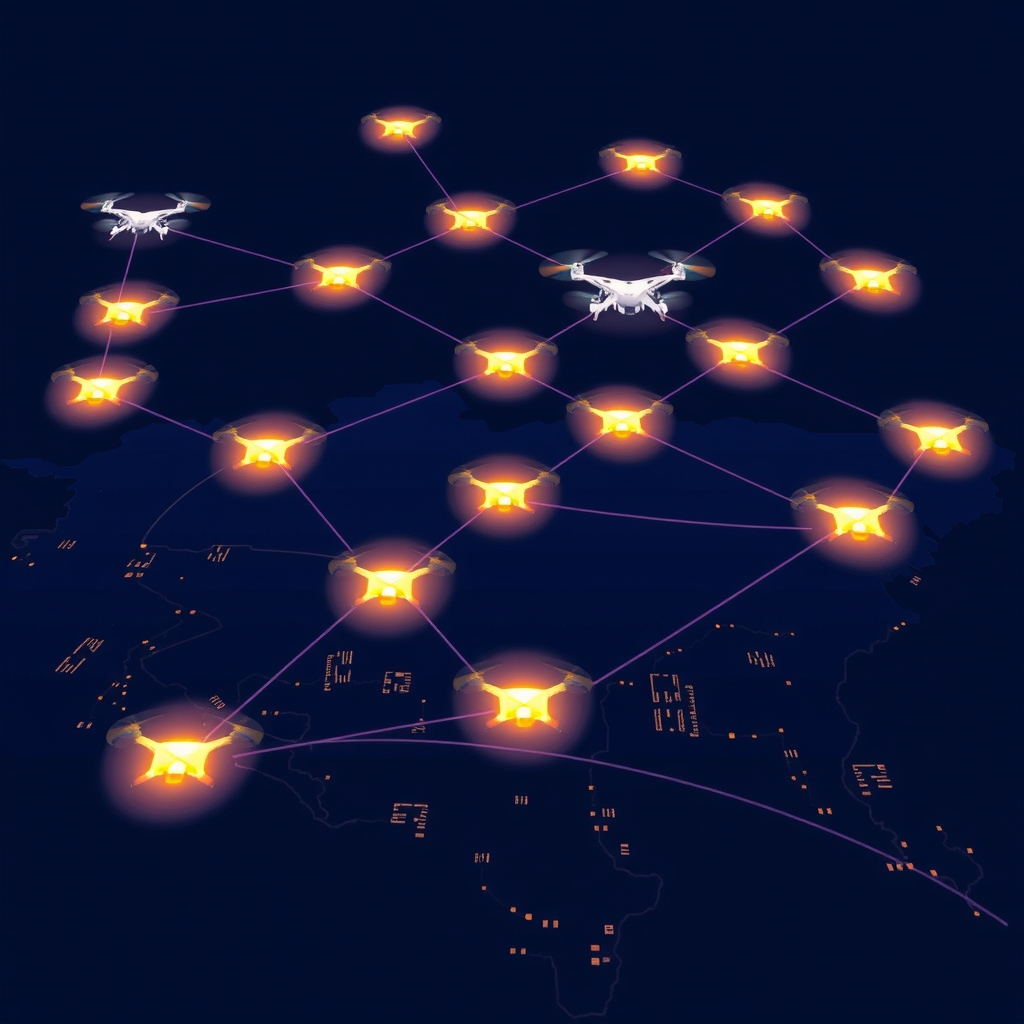
Wing and Walmart brought drone delivery to the Charlotte metro on October 21, 2026, opening service simultaneously from seven Walmart Supercenters across a geography that spans ten communities. The stores are located in Charlotte, Concord, Gastonia, Kannapolis, Kings Mountain, Lincolnton, and Shelby, with the surrounding communities of Huntersville, Indian Trail, and Matthews also within delivery range. Two additional Charlotte stores — on Callabridge Court and East Independence Boulevard — are expected to come online within weeks.
Charlotte is the fifth active metro in the Wing–Walmart network, joining Atlanta, Dallas–Fort Worth, Houston, and Orlando. The partnership, which began in 2023 with a two-store pilot in the Dallas metro area reaching roughly 60,000 homes, has since grown to serve more than three million customers across those five metropolitan areas and logged over one million commercial deliveries.
The hub architecture for Charlotte follows Wing's established model: a fenced drone nest in the Walmart Supercenter parking lot, housing multiple aircraft on dedicated charging pads. The hub at the Galleria Boulevard Supercenter in southeast Charlotte features twelve drone pads and served as the public demonstration site at launch. Wing's FAA authorizations allow nests of up to 24 aircraft, with up to 400 flights per nest per day.
Orders are placed through the Wing Drone Delivery app, which surfaces a catalog of thousands of drone-eligible Walmart items. Customers select a precise drop zone — a driveway or open yard area roughly the size of a picnic blanket — and can track delivery in real time. On arrival, the drone hovers approximately 23 feet above ground and lowers the package on a tether, releasing it at ground level without requiring a customer to unclip it. Wing states deliveries can arrive in as little as 30 minutes from order placement; the company's recorded fastest delivery stands at two minutes and 47 seconds.
The Charlotte service is offered free for a limited promotional period. Standard pricing, which applies outside the promotion, is $19.99 per delivery for non-members; Walmart+ members also receive free delivery during a separate limited-time offer.
Wing's aircraft operate autonomously. The company states its drones do not carry a live video feed monitored by a pilot during deliveries; onboard sensors are used for navigation and to verify that the delivery zone is clear. The Federal Aviation Administration regulates the flights themselves, meaning Wing and Walmart do not require approval from local municipalities to fly — though they do require city sign-off for use of parking lot property.
The Charlotte activation is one step in a larger rollout announced in January 2026, when Wing disclosed plans to add 150 stores to the network through 2026 and into 2027, bringing the total to more than 270 Walmart locations. In early October 2026, Wing and Walmart named Denver and Seattle as the next two metros, slated for 2027 entry. Fourteen additional markets — including Los Angeles, Miami, Philadelphia, Phoenix, San Francisco Bay Area, and St. Louis — are listed as coming soon. At full build-out, the network is projected to reach more than 40 million customers, or over 10% of the U.S. population.
The Charlotte launch is also coinciding with regulatory activity in prospective markets. In Wentzville, Missouri — a suburb of St. Louis, one of Wing's announced future metros — Wing's manager of local policy presented an 18-drone nest proposal to the city's Planning and Zoning Commission in June 2026. That presentation triggered the drafting of a local drone delivery zoning ordinance. The Board of Aldermen gave the ordinance, Bill 4914, its first reading on October 22, 2026. The bill would make drone delivery a conditional use in Wentzville and require a noise study before any nest is constructed, though it currently sets no payload weight limit.
Technical Breakdown
Platform/UAV Class: Wing operates two hybrid VTOL aircraft variants — the Hummingbird 7000W-B and the larger 8000-A — both using vertical-lift rotors for takeoff and landing combined with fixed-wing cruise configuration for efficient forward flight.
Weight: The 7000W-B has a maximum takeoff weight of 14 lb (per FAA national table); the 8000-A is 24.3 lb MTOW.
Payload: The 7000W-B carries 2.3–2.7 lb; the 8000-A carries 5–6.6 lb. In Charlotte, the current standard order cap is 2.5 lb. More than half of Walmart's product catalog by item count falls within this threshold. No flammable, alcohol, or pharmaceutical products are eligible.
Propulsion: All-electric; aircraft charge on dedicated pads at the nest hub.
Delivery Mechanism: Tether lowering from a hover altitude of approximately 23 feet above ground. The drone never lands off-site; the package is released at ground level and the drone departs before the customer retrieves it.
Endurance/Range: Each nest covers approximately a 6-mile radius. Wing's larger cargo drone supports a 12-mile round-trip range at up to 65 mph cruise speed.
Cruise Speed: Up to 60–65 mph depending on variant.
Delivery Time: Typically under 30 minutes from order; mission flight time can be as short as five minutes.
Autonomy Level: Fully autonomous flight with no live remote pilot video feed during delivery. Aircraft self-assign airspace, map delivery routes, and use onboard sensors to verify drop zone safety. Pilots oversee multiple flights from remote operations centers rather than manually flying each aircraft.
Hub Capacity: Up to 24 aircraft per nest (FAA authorization); up to 400 flights per nest per day.
FAA Status: Wing received its FAA air operator certificate in 2019 and has subsequent BVLOS authorizations.
Industry Impact
For Operators and Manufacturers: The Charlotte launch demonstrates Wing's ability to execute a coordinated multi-store metro activation — seven stores going live simultaneously — rather than a sequential store-by-store rollout. This represents an operational maturation from the early DFW pilot model. Wing's two-aircraft-variant strategy (standard and high-payload) allows it to address approximately 70% of typical orders with the lighter platform and consolidate heavier orders onto the 8000-A, reducing two-drone dispatch events. The company reports its top 25% of users order three times per week, suggesting the repeat-use economics needed to justify infrastructure investment are beginning to materialize.
For Regulators: The Wentzville, Missouri case is an emerging template for how municipal governments interact with drone delivery expansion. Wing's June 2026 zoning pitch — which directly triggered an ordinance — illustrates that local regulatory frameworks are being written reactively, in response to operator proposals, rather than proactively. The absence of a payload weight cap in Bill 4914's first reading points to a gap in municipal technical literacy that regulators and standards bodies may need to address at a broader level.
For Retailers and Integrators: Walmart's COO has noted publicly that customers who adopt fast delivery double their spend, and those who use it four or more times triple it — framing rapid delivery not as a logistics cost but as a revenue multiplier. For integrators building last-mile infrastructure, the Wing nest model (commercial parking lot, all-electric, FAA-regulated airspace, city approval only for land use) offers a replicable, relatively low-friction deployment blueprint.
For the Broader Market: Wing's 270-store target, if achieved, would put autonomous drone delivery within range of more than 40 million Americans — a scale threshold that would materially validate the segment's commercial viability. The expansion into Denver and Seattle in 2027 is notable for introducing Wing's platform to Pacific Northwest precipitation and Colorado altitude conditions, stress-testing the operational envelope beyond the Sun Belt markets where the network has predominantly operated to date.